Showing posts with label photojournalism. Show all posts

Wednesday, May 30, 2012

First Pre-Travel Class

The 2012 Navajo Oral History Project held its first class meeting on Tuesday, May 29.  This is a "Pre-Travel Class" through which the students meet each other and begin research about the Navajo culture and general journalism topics in preparation for the field work that begins next week.

10 Diné College students gathered in an Interactive Television (ITV) classroom at the DC Main Campus in Tsaile, Arizona, and connected with 12 Winona State University students in a WSU classroom in Winona, Minnesota.


Each student introduced themselves in the traditional Navajo way, giving their names then their clans. For the WSU students, this meant speaking about their mother and father's family names and heritage, then grandparents names and heritage. Many of the Diné College students introduced themselves in the Navajo language and then translated.

The class leaders are Dr. Miranda Haskie, professor of Sociology and Behavioral Sciences at Diné College; Dr. Tom Grier, professor of Mass Communication, Winona State University, and Mr. Robbie Christiano, a recent WSU Mass Communication graduate, current graduate student and teaching assistant for the course.

Each class leader spoke of their vision for the class and introduced concepts to begin preparing students to build positive working relationships with each other and to develop skills related to journalism and visual journalism.


Two more ITV-based classes will occur this week, then the WSU students will travel to the Navajo Nation where they will spend nearly three weeks in the field conducting research and interviews centered on a Navajo elder, with the ultimate goal of creating Living History documentaries about each elder.

This blog will be updated almost daily throughout the project, allowing family and friends to follow the class process.  In the future, student-produced photos and words will be featured here frequently.

In the near future, there will be a blog post which introduces each student and faculty member with a mugshot-style photo so readers can get to know the class members.

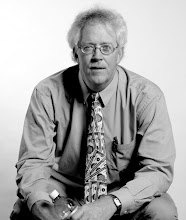
The blog is hosted and produced by Dr. Tom Grier.  Occasionally in writing the blog, I may slip into first-person narration style narration (as I did just there... and there again).  When that happens, you'll know it's me talking.  Photos on the blog are by Tom Grier, unless otherwise credited -- my preference is for you to see many photos credited to the excellent visual journalists that are part of this project.

I encourage blog-readers to "favorite or bookmark" the blog, and check in often, or register as a "follower" of the blog to get reminders when the blog is updated. Share the blog address as far and wide as you wish so interested people can follow the hard work, dedication of the students as well as the fun they have during this adventure. In addition, you can read further down the blog-- into the past-- and see what previous classes have done. This is the fourth year of the Navajo Oral History project!

Finally, the blog is open for reader comments. Feel free to share your thoughts and questions here. The students appreciate knowing the blog is being read and love hearing reader comments.

Thanks for your interest and support of this important project.

-- Dr. Tom Grier, WSU

Monday, May 14, 2012

2012 Navajo Oral History Project Begins May 29


On May 29, the day after Memorial Day, a group of Winona State University and Diné College students will begin their summer journalism experience: the 2012 Navajo Oral History Project. The students begin meeting via Interactive Television (ITV) between the two campus locations: Diné College in Tsaile, Arizona, on the Navajo Nation, and Winona State University in Winona, Minnesota.
The students will meet via ITV three times that week as they prepare for nearly three weeks of field work on the Navajo Nation beginning June 3.
The Minnesota students will stay in residence halls at Diné College and will work in partnership teams with DC students. The teams will do a service project for a Navajo elder, and then interview the elder three times. The groups will produce documentary film projects about the elders.
The documentaries will be archived at the Navajo Nation Museum and Library and at the WSU and DC Libraries; and will also be archived at the Smithsonian Institution's Museum of the American Indian.
While on the Navajo Nation, the Winona State students will participate in Navajo cultural activities including a camping weekend at a Navajo family's sheep camp in Canyon de Chelly and visiting the Navajo Tribal Government Center.
For the next several weeks, this blog will cover the Navajo Oral History project. I, and the students, will write blog entries about our daily activities including text and photos.
Bookmark or "favorite" this blog and check it often to stay up to date on this important and fun learning adventure. Feel free to look back through past years' blog entries for a glimpse at how the project has progressed, changed and improved over the years. Share the blog with friends, family members and anyone that may be interested.
Thanks for your interest.

-- Dr. Tom Grier
   Professor of Mass Communication
   Winona State University
--------------

The WSU Students participating in the 2012 Navajo Oral History Project (and their majors and hometowns) are:

Shannon Bolte, photojournalism, Rochester, Minn.
Joel Farber, communication studies and mass communication, Hastings, Minn.
Kelsey Foss, public relations, Sparta, Wis.
Emily Gust, public relations, Verona, Wis.
Liam Krause, photojournalism, Deerfield, Wis.
Kelly Kusilek, public relations, Cannon Falls, Minn.
Elena Lavorato, journalism, Oakdale, Minn.
Sammi Luhmann, journalism, Robbinsdale, Minn.
Laura McCormick, public relations, Apple Valley, Minn.
Rachel Rivers, photojournalism, Wabasha, Minn.
Stefani Schmidt, journalism and political science, Winona, MN
Elisenda XifraReverter, photojournalism, Girona, Spain

Diné College students are still registering for the course and will be introduced on the blog when the class begins.

Sunday, April 26, 2009

The Impossibility of The Perfect Photograph

I've often thought about the possibility of shooting a perfect photograph. I started taking photos at about age 8 or 9 with an old Brownie camera. Since then, I guess I've take more than a quarter million photos. Most of them not that good, I hate to admit.

Since I began teaching a visual communication class in 2000, my own photography got better. I try to inspire my students to shoot well-composed images. I show my own images in class to illustrate a concept. Frequently, I explain how my own photos fall short of perfection or how they could have been more successful.

In recent years, I've tried to set and keep appointments for myself to think about, plan and shoot images. I make time for myself and my craft. I've made some images of which I'm proud. But still, each photo has some flaw or less than ideal compositional element.

A great photograph is superior technically: focus, contrast, print quality and the like. A great photograph is composed and cropped well so the viewer is drawn to the figure-- the main idea-- while the ground-- everything else in the image that helps the viewer interpret it-- explains the context and meaning. More than that, an excellent photo is one that communicates a specific message as intended by the creator.

Does the perfect photograph exist?

Dorothea Lange's "Migrant Mother," shot in 1936 for the U.S. Resettlement Administration, comes close. The photo is well-focused, has excellent contrast and displays many textures. From a content standpoint, the image is nearly perfect. A viewer can't help but feel compassion for Florence Thompson, the woman in the image, and her children.

Look closer and you may notice a "phantom thumb" in the lower right corner. Thompson's thumb and index finger were in the original print, holding a tent pole. The image was retouched to make the thumb less noticeable. It's still a great photo, but not perfect.

Steve McCurry's "Afghan Girl" appeared on the cover of National Geographic magazine in June 1985 and is another perfect photo candidate. The haunting, piercing green eyes of then 13-year-old Sharbat Gula in a refugee camp in Pakistan make this one of the most recognizable images ever.

After closer scrutiny, the viewer may notice a vertical reddish line at the right third of the image from top to bottom. This is most likely the edge between two panels of the green fence behind Gula. The line is not a huge distraction, but it can take some eye time away from the girl's vacant expression.

John Filo's "Kent State" photo was shot May 4, 1970, and moved that day on Associated Press. The image of Mary Vecchio screaming as she knelt over the body of Jeffrey Miller, a student who was shot by National Guardsmen, appeared in hundreds of publications perhaps most notably Life Magazine. It is one of the most memorable spot news photos in U.S. history and won a Pulitzer Prize.

In May 1995, Life ran the image again in a feature on important news photos over the years. In the new version, a fence post directly behind Vecchio's head is gone. In the original photo, the fence post was a distraction. It looked as if it could have been a javelin piercing Vecchio's skull. To be fair, Life editors said they had not altered the image on purpose. Rather, they received the photo for the 1995 edition from their image library and only noticed the alteration after printing.

Finally, let's consider what is arguably Ansel Adams' most famous photo: "Moonrise, Hernandez, New Mexico." Shot in November of 1941, the image shows a nearly-full moon rising over a small community and fading sunlight reflecting off crosses and headstones in a foreground cemetery.

Actually, I can't think of anything about the image that isn't perfect. But the perfectionist in Ansel Adams wanted a second shot. He often told how he had seen the moon in the mirror of his truck while driving. He pulled over, quickly set up his camera and exposed the shot. Before he had time to insert another plate in the camera, the light had faded and the magical moment had passed.

I'm humble enough to know that none of my images compare with those mentioned in this article. I feel a bit sheepish passing a critical eye over these lastingly memorable images. That's the nature of the serious practice of the craft of photography. The key word is practice.

In 2008, I spoke with Jim Brandenburg, noted National Geographic photographer who lives and photographs in Northern Minnesota. When he visited our university for a lecture, I had the chance to show him some of my work and talk about how his approach to the craft. I told him I was still trying to shoot a perfect photograph. Brandenburg admitted he too felt he was getting closer but he had not yet achieved that goal.

Maybe that's what keeps us going.