Showing posts with label Interactive Television. Show all posts

Tuesday, May 14, 2013

Day 2 of the 2013 Navajo Oral History Project

Today (Tuesday, May 14) was the second day of ITV classes uniting students from Winona State University and Diné College, as they begin planning for their fieldwork interviewing Navajo elders and developing documentary films about the elders' lives.

In today's class, the students got an introduction to interviewing techniques, and a brief overview of best (and worst) practices in video editing.

They also were verbally introduced to the five Navajo elders who have agreed to be a part of the summer project. For now, the names of the elders are not being released out of respect for their privacy.  Once the students have been introduced to the elders and begin their work, the identities of the elders will become apparent here on the blog.

At the end of today's ITV session, Teaching Assistant Robbie Christiano, and Skylar Ogren, one of the students, did a walkthrough and tutorial on how to use the new high-resolution video cameras for their interviews.


In the evening, Tom and Julie Grier hosted a BBQ at their home for all the WSU 2013 Navajo Oral History students. It was an opportunity to bond more as a social group, and to watch a film called "30 Days on the Navajo Reservation" with Morgan Spurlock. The film helps students to prepare a bit for the kind of things they will see and feel while on the reservation.

Most of this year's group was able to attend the BBQ, and we had one party-crasher: Brianna Klapperich, who is an alumna of the Navajo oral History project. She participated in the third year of the project in 2011.


A special thanks to the WSU Mass Communication Department which has supported the Navajo Oral History project over its five-year history by making the department's equipment available to students.  In addition, thanks go to WSU MCOM employees: Doug Westerman, Mike Martin and Ellen Severson, who keep the equipment up-to-date and operational. The Navajo Oral History project couldn't exist without their expert help.

Since thanks are being offered, it's important to also recognize the early and continued support this project has received from the Winona State University Foundation.  The WSU-F's Special Project Grants committee has provided several grants over the years to help fund student travel, research travel and funds for the reception and recognition of the student's hard work.

Classes Begin for 2013 Navajo Oral History Project

The 2013 Navajo Oral History project -- a collaboration between Diné College of Tsaile, Arizona, and Winona State University of Winona, Minnesota -- started on Monday,  May 13, with its first class.

The students met in two classrooms; one in Winona and one in Tsaile. The two classrooms were connected via Interactive Television so students could meet and talk together. The first three classes are planned for ITV, then the WSU students travel to Arizona to begin the fieldwork part of the program.

During the first class, the students introduced themselves and talked about their experience in journalism and their desire to do a great job telling the stories of a Navajo elder.  There were also a few short lectures about Navajo culture and visual communication and composition.

This blog is the location for updates about the class throughout the summer of 2013.

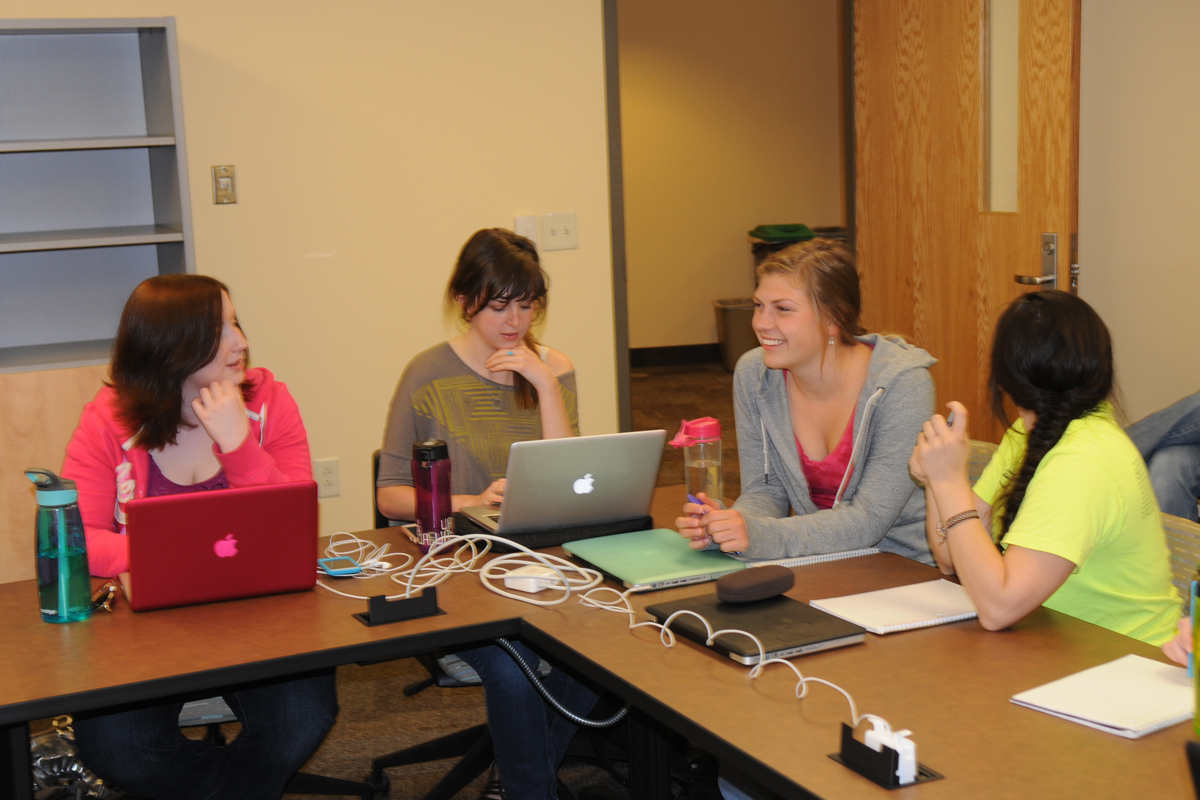
Below are several photos from the first class. In this case, the photos are all by blog author and editor Tom Grier, one of the professors of the class. Once field work begins, the blog aims to feature more student photography. In general, if a photo on the blog is uncredited it means it was by Grier. Anytime a photo by one of the students appears, it will have a by-line.

Viewers can click on any image to see a larger version of it, and the images can be downloaded. Please respect copyrights and do not use any photo from this blog without permission. Family members of students can feel free to use the photos or re-post them to their own social media sites, but please give credit to the Navajo Oral History project, and to the photographers by name.


Robbie Christiano (above), the teaching assistant for the Navajo Oral History project, shared his thoughts on the first day of the 2013 class.

The students seem excited, and a bit nervous.  The nervousness is a direct result of their desire to do excellent work on these important documentaries and to be respectful as they experience a new culture.

We hope all readers of the blog will enjoy seeing the photos and reading of the experiences of the students. The comments section at the end of each blog post are open for submissions from anyone. Please be respectful, and feel free to share comments, questions, opinions with us.

Friday, June 11, 2010

2nd Drafts - Class Peer Evaluation

Today (Friday, June 11, 2010), was the second class meeting for members of the 2010 Navajo Oral History program. Following our two weeks of work in the field in May, the students have been working on editing their photos and videos and putting them together into documentary projects.

The student teams are creating a Living History feature about a Navajo elder that they interviewed several times. The Living History piece will sum up the highlights of the lives of the elders in about 10-15 minutes.

Each group will also create a shorter-- 3-5 minute-- media piece about their elder. The media pieces are designed to focus on one main highlight or story about the elder, and to be very tightly edited to maintain viewer interest while watching in an on-line video streaming environment.

For today's class meeting, three of the four groups had projects to show in a second draft format. In a process known as peer evaluation, everyone in the class watches each draft project and makes notes. Then everyone shares their thoughts, ideas, and suggestions.


In general, each project goes through 2-3-4 drafts before it is finalized. This requires a lot of time and commitment from the students, but in the end results in a much better piece that can stand the test of time.

For class, we once again connected two classrooms-- one at Winona State University in Minnesota and one at Diné College in Arizona-- via Interactive Television, so we could simultaneously watch the projects and then comment to each other.


The drafts of the projects are really looking good. I'm so impressed with the quality of the video and photography, and the narration and thematic transitions that help tell the story to viewers.

This is the part where the adrenaline starts pumping as the students go through hours and hours of gathered video, text and photos and finds a way to weave it all together into a narrative storyline that accurately and respectfully reveals the life of a Navajo elder. It's a communication art, that takes skill with the equipment and software and a sense of passion and compassion for the story.

This is also where the students learn so much about the process of documentary journalism. These finished pieces will really stand out in their portfolios and should be a big help when they apply for jobs or for admission to graduate school.

I know many people reading this blog would love to see some of the work now, but I'll ask you to be patient. We want to be sure the pieces are complete and professional before we release them. When they are complete, each student will receive copies of all the projects, and we'll post the shorter media pieces on the WSU Mass Communication department's web site: www.Winona360.org.

If you'd like, you can go to Winona360.org right now and search for last year's Navajo Oral History projects and watch those, to get an idea of the quality of the student-created documentaries.

We have another class schedule for next Friday (June 18) to take a look at more of the drafts.

Thanks again for reading and following our class progress.