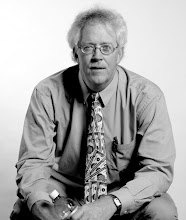
The first organizational meetings for the 2015 Navajo Oral History Project class are being held and students are being recruited. The project is a collaboration between Winona State university (Winona, Minnesota) and Diné College (Tsaile, Arizona), the Tribal College of the Navajo Nation.
Three meetings were held in Mid-October at WSU with about 20 Mass Communication students showing interest in participating in the documentary journalism project that goes into the field in May 2015. Last week (Oct. 27-30) Professor Tom Grier and Teaching Assistant Robbie Christiano visited Diné College and spoke to seven classes there to promote the 2015 NOHP. About 20 DC students also indicated interest in joining the class next spring.
Grier and Christiano will hold another promotional meeting at WSU on Monday, Nov. 3, at 1 p.m. in Phelps Hall, Room 116. Following that meeting, the program will begin to finalize its roster of students. The class has a maximum enrollment of 14 WSU students and 14-16 Diné College students.
In mid-May the WSU group will travel to Tsaile, Ariz., on the Navajo Nation to spend nearly three weeks immersed in the culture and working on documentary journalism pieces. The WSU group will stay in residence hall facilities at Diné College and work in collaborative teams with Diné College students. The teams will provide a service project for a Navajo elder (cleaning, gardening, repairing, etc.) to build a relationship of trust, and then interview the elders three times using video, audio and still photography. The groups will produce documentary films that respectfully and authentically tell the elder's story.
DVD copies of the finished films will be given the the families of the elders and each student will get copies. The films will be archived at the Navajo Nation Library, Navajo Nation Museum, Diné College Library, Winona State University Library, Winona Public Library, and the Smithsonian Institution's National Museum of the American Indian. Not many undergraduate students can say their research projects are arched at the Smithsonian.
The Navajo Oral History Project has enjoyed five years of successful collaboration between the two higher education institutions. During those years, 23 documentary film projects about 23 Navajo elders have been completed. The program has included 51 WSU students and 33 Diné College students.
If anyone has questions or comments on the project, email Professor Tom Grier: tgrier@winona.edu.
Showing posts with label Navajo Oral History. Show all posts
Showing posts with label Navajo Oral History. Show all posts
Sunday, November 2, 2014


Saturday, September 14, 2013
Premiering the 2013 Navajo Oral History Project films
We held the first premiere event and reception at Winona State University tonight (Friday, Sept. 13). About 150 people were in attendance, including WSU students, faculty, staff, neighbors and family and friends of the students who produced the films.
In addition, about 20 alumni, representing each of the five years of the project, attended.
It was such a nice event. Several dignitaries spoke including: WSU President Scott R. Olson, WSU's Dean of the College of Liberal Arts Ralph Townsend, WSU's Chair of the Mass Communication Department Ron Elcombe, and, representing the WSU Foundation, William "Chops" Hancock.
This past summer, a group of students from WSU and Diné College, the Tribal College of the Navajo Nation, worked in collaborative teams to create documentary films focused on the life stories of five Navajo elders. The students researched, photographed, recorded, edited and produced the films which were premiered tonight.
After each film was shown, the student filmmakers spoke about the process and the privilege of meeting the elders and helping to preserve their life stories for all time.
The films will be archived at the Navajo Nation Museum and Library, The WSU Library, The Diné College Library, and at the Smithsonian Institution's National Museum of the American Indian.
A second premiere event will be held Monday, Sept. 16, beginning at 5:30 p.m. in the Student Union Building at Diné College in Tsaile, Arizona, on the Navajo Nation.
If you are in the Four Corners area on Monday, please come and enjoy refreshments and some really great films.

In addition, about 20 alumni, representing each of the five years of the project, attended.
It was such a nice event. Several dignitaries spoke including: WSU President Scott R. Olson, WSU's Dean of the College of Liberal Arts Ralph Townsend, WSU's Chair of the Mass Communication Department Ron Elcombe, and, representing the WSU Foundation, William "Chops" Hancock.
This past summer, a group of students from WSU and Diné College, the Tribal College of the Navajo Nation, worked in collaborative teams to create documentary films focused on the life stories of five Navajo elders. The students researched, photographed, recorded, edited and produced the films which were premiered tonight.
After each film was shown, the student filmmakers spoke about the process and the privilege of meeting the elders and helping to preserve their life stories for all time.
The films will be archived at the Navajo Nation Museum and Library, The WSU Library, The Diné College Library, and at the Smithsonian Institution's National Museum of the American Indian.
A second premiere event will be held Monday, Sept. 16, beginning at 5:30 p.m. in the Student Union Building at Diné College in Tsaile, Arizona, on the Navajo Nation.
If you are in the Four Corners area on Monday, please come and enjoy refreshments and some really great films.

The faculty that taught the course and advised and supported the students are: Dr. Tom Grier, professor of Mass Communication, Winona State University; Dr. Miranda Haskie, professor of Social & Behavioral Science, Diné College, and Mr. Robbie Christiano, WSU Alumnus and Grad Student-Grad Assistant.
The faculty members agreed that the films are excellently produced and important historical documents. Thanks to all the students involved in this year, and each year, of the Navajo Oral History Project.
Monday, June 10, 2013
Post-Travel Class #1
The 2013 Navajo Oral History project students came together today (Monday, June 10) via Interactive Television connection between Winona State University and Diné College.
This was the first meeting since the WSU students left the Navajo Nation and returned home. Many said it was nice to see their classmates again, via ITV at least, to stay connected and continue working on their journalism projects.
During class, each group presented a portion of their documentary films and everyone watched and offered constructive criticism.
The projects still have a long way to go, but they're starting to shape up nicely. There's a narrative structure to each and the beginning stages of organization and story flow are coming together. The students will meet several times this week in individual groups via internet conferencing. The updated drafts will be viewed again on Wednesday morning, and then again Friday morning.


This was the first meeting since the WSU students left the Navajo Nation and returned home. Many said it was nice to see their classmates again, via ITV at least, to stay connected and continue working on their journalism projects.
During class, each group presented a portion of their documentary films and everyone watched and offered constructive criticism.
The projects still have a long way to go, but they're starting to shape up nicely. There's a narrative structure to each and the beginning stages of organization and story flow are coming together. The students will meet several times this week in individual groups via internet conferencing. The updated drafts will be viewed again on Wednesday morning, and then again Friday morning.


Tuesday, May 14, 2013
Classes Begin for 2013 Navajo Oral History Project
The 2013 Navajo Oral History project -- a collaboration between Diné College of Tsaile, Arizona, and Winona State University of Winona, Minnesota -- started on Monday, May 13, with its first class.
The students met in two classrooms; one in Winona and one in Tsaile. The two classrooms were connected via Interactive Television so students could meet and talk together. The first three classes are planned for ITV, then the WSU students travel to Arizona to begin the fieldwork part of the program.
During the first class, the students introduced themselves and talked about their experience in journalism and their desire to do a great job telling the stories of a Navajo elder. There were also a few short lectures about Navajo culture and visual communication and composition.
This blog is the location for updates about the class throughout the summer of 2013.
Below are several photos from the first class. In this case, the photos are all by blog author and editor Tom Grier, one of the professors of the class. Once field work begins, the blog aims to feature more student photography. In general, if a photo on the blog is uncredited it means it was by Grier. Anytime a photo by one of the students appears, it will have a by-line.
Viewers can click on any image to see a larger version of it, and the images can be downloaded. Please respect copyrights and do not use any photo from this blog without permission. Family members of students can feel free to use the photos or re-post them to their own social media sites, but please give credit to the Navajo Oral History project, and to the photographers by name.


The students met in two classrooms; one in Winona and one in Tsaile. The two classrooms were connected via Interactive Television so students could meet and talk together. The first three classes are planned for ITV, then the WSU students travel to Arizona to begin the fieldwork part of the program.
During the first class, the students introduced themselves and talked about their experience in journalism and their desire to do a great job telling the stories of a Navajo elder. There were also a few short lectures about Navajo culture and visual communication and composition.
This blog is the location for updates about the class throughout the summer of 2013.
Below are several photos from the first class. In this case, the photos are all by blog author and editor Tom Grier, one of the professors of the class. Once field work begins, the blog aims to feature more student photography. In general, if a photo on the blog is uncredited it means it was by Grier. Anytime a photo by one of the students appears, it will have a by-line.
Viewers can click on any image to see a larger version of it, and the images can be downloaded. Please respect copyrights and do not use any photo from this blog without permission. Family members of students can feel free to use the photos or re-post them to their own social media sites, but please give credit to the Navajo Oral History project, and to the photographers by name.


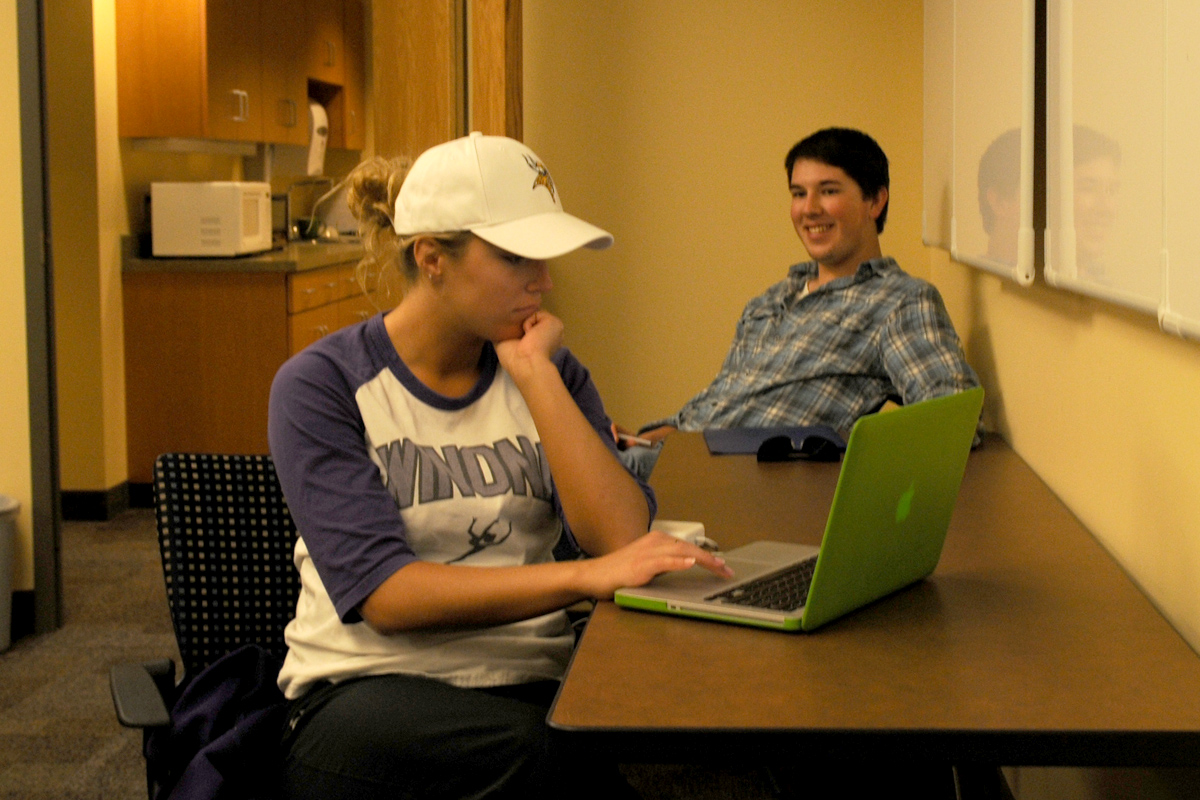

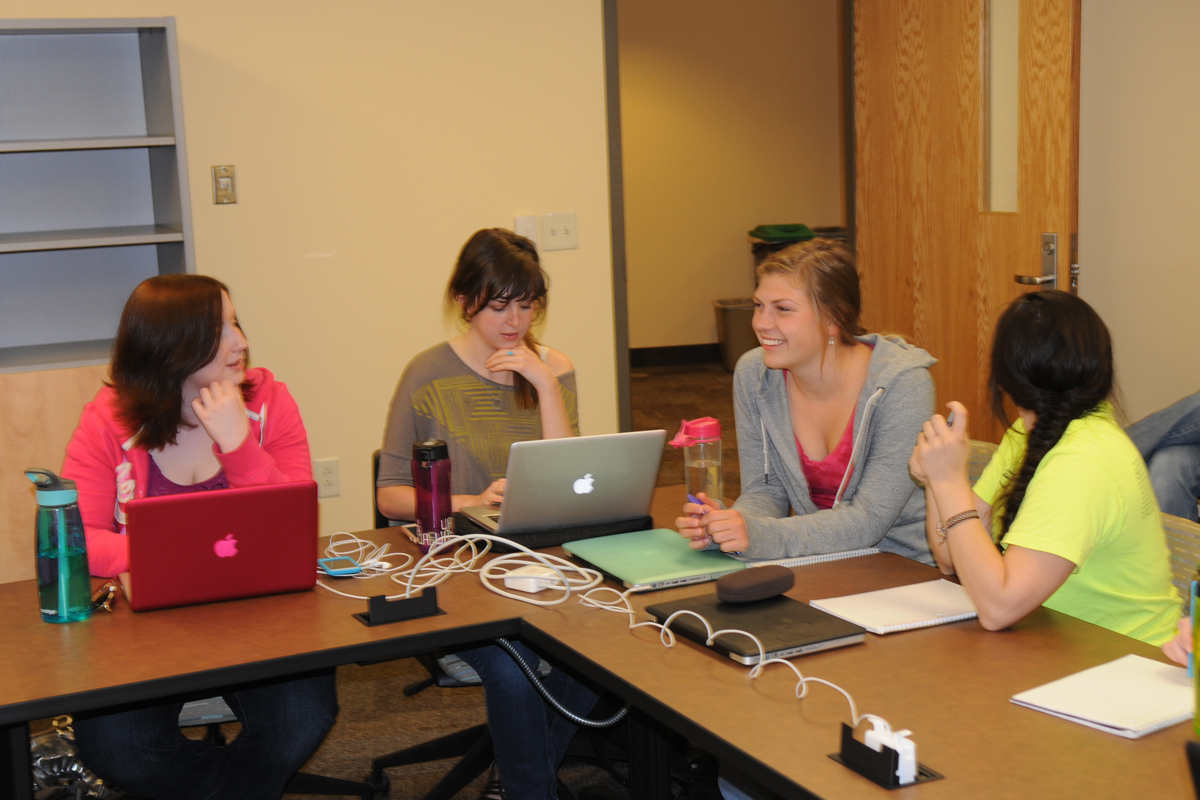


Robbie Christiano (above), the teaching assistant for the Navajo Oral History project, shared his thoughts on the first day of the 2013 class.
The students seem excited, and a bit nervous. The nervousness is a direct result of their desire to do excellent work on these important documentaries and to be respectful as they experience a new culture.
We hope all readers of the blog will enjoy seeing the photos and reading of the experiences of the students. The comments section at the end of each blog post are open for submissions from anyone. Please be respectful, and feel free to share comments, questions, opinions with us.
Wednesday, February 20, 2013
The 2013 Navajo Oral History Project Begins...
Today (Wednesday, Feb. 20, 2013), Robbie Christiano and I held the first official meeting of the 2013 Navajo Oral History project class at Winona State University.
This was an organizational/informational meeting for the 13 WSU students who will participate in the project this summer to meet each other and learn about travel plans, paperwork, text books, etc. This group will meet again later in Spring Semester to finalize plans, then the class begins its meetings with the Diné College participants in mid-May.
12 of the 13 WSU student participants were present at the meeting (one had a baby just two days ago and understandably couldn't make the meeting). The class members all seemed interested in hearing about plans, and excited about the important projects they will undertake in just a few weeks.
These students are all WSU Mass Communication majors. One is a graphic design major, a program shared between Mass Communication and the Art Department.
As each student introduced themselves and their geographic and ethnic backgrounds, it was amazing to see the diversity of the group -- and the similarities that all were interested in using their skills and abilities to help tell the life stories of Navajo elders. We have students in the group that are seasoned journalists, skilled photographers and competent video producers and editors. All have had several introductory courses in mass communication and bring their knowledge to their projects.
In mid-May the WSU group will travel to Tsaile, Ariz., on the Navajo Nation to spend nearly three weeks immersed in the culture and working on documentary journalism pieces. The WSU group will stay in residence hall facilities at Diné College and work in collaborative teams with Diné College students. The teams will provide a service project for a Navajo elder (cleaning, gardening, repairing, etc.) to build a relationship of trust, and then interview the elders three times using video, audio and still photography. The groups will produce documentary films that respectfully and authentically tell the elder's story.
DVD copies of the finished films will be given the the families of the elders and each student will get copies. The films will be archived at the Navajo Nation Library, Navajo Nation Museum, Diné College Library, Winona State University Library, Winona Public Library, and the Smithsonian Institution's National Museum of the American Indian. We're very proud of this. Not many undergraduate students can say their research projects are arched at the Smithsonian.
The Summer 2013 edition of the Navajo Oral History Project is the fifth year of the successful collaboration. Those reading the blog interested in the project may wish to view the films of past years. They are all available for viewing on YouTube. Follow the link to one of the first films of the series-- featuring Harry Walters, a Navajo Cultural Specialist and recently retired director of the Ned Hatathli Museum at Diné College. From there, viewers will be able to see other films on Prof. Tom Grier's YouTube channel from the series.
The WSU Mass Communication department -- and the families and friends of the participating students -- can be proud of the 13 students that have chosen to use part of their summer to practice and expand their communication skills, and to give of themselves and their talent to be involved in this important historical project.
The names of the 2013 Navajo Oral History project students from Winona State University are:
Madison Duncan, Winona, Minn.
Shiloh Gulbranson, Lindstrom, Minn.
Brett Gustafson, Rochester, Minn.
Whitney Harlos, Rochester, Minn.
Eric Hawkins, Rochester, Minn.
Tom Hays, Chaska, Minn.
Laura Humes, Mahtomedi, Minn.
Jolene Kuisle, Rochester, Minn.
Adam Maciejczak, Lake City, Minn.
Cara Mannino, Rochester, Minn.
Skylar Ogren, Winona, Minn.
Darin Strohmenger, Cedarburg, Wis.
Danielle Wieczorek, Andover, Minn.
In a few weeks, Robbie Christiano and Tom Grier from WSU will be speaking to classes at Diné College and helping recruit DC students to join this summer project. Once the class is fully established, all the students will be introduced here on the blog. The activities of the class will be highlighted throughout the project in text and photos here as well.
If anyone has questions or comments on the project, email Professor Tom Grier: tgrier@winona.edu.
This was an organizational/informational meeting for the 13 WSU students who will participate in the project this summer to meet each other and learn about travel plans, paperwork, text books, etc. This group will meet again later in Spring Semester to finalize plans, then the class begins its meetings with the Diné College participants in mid-May.
12 of the 13 WSU student participants were present at the meeting (one had a baby just two days ago and understandably couldn't make the meeting). The class members all seemed interested in hearing about plans, and excited about the important projects they will undertake in just a few weeks.
These students are all WSU Mass Communication majors. One is a graphic design major, a program shared between Mass Communication and the Art Department.
As each student introduced themselves and their geographic and ethnic backgrounds, it was amazing to see the diversity of the group -- and the similarities that all were interested in using their skills and abilities to help tell the life stories of Navajo elders. We have students in the group that are seasoned journalists, skilled photographers and competent video producers and editors. All have had several introductory courses in mass communication and bring their knowledge to their projects.
In mid-May the WSU group will travel to Tsaile, Ariz., on the Navajo Nation to spend nearly three weeks immersed in the culture and working on documentary journalism pieces. The WSU group will stay in residence hall facilities at Diné College and work in collaborative teams with Diné College students. The teams will provide a service project for a Navajo elder (cleaning, gardening, repairing, etc.) to build a relationship of trust, and then interview the elders three times using video, audio and still photography. The groups will produce documentary films that respectfully and authentically tell the elder's story.
DVD copies of the finished films will be given the the families of the elders and each student will get copies. The films will be archived at the Navajo Nation Library, Navajo Nation Museum, Diné College Library, Winona State University Library, Winona Public Library, and the Smithsonian Institution's National Museum of the American Indian. We're very proud of this. Not many undergraduate students can say their research projects are arched at the Smithsonian.
The Summer 2013 edition of the Navajo Oral History Project is the fifth year of the successful collaboration. Those reading the blog interested in the project may wish to view the films of past years. They are all available for viewing on YouTube. Follow the link to one of the first films of the series-- featuring Harry Walters, a Navajo Cultural Specialist and recently retired director of the Ned Hatathli Museum at Diné College. From there, viewers will be able to see other films on Prof. Tom Grier's YouTube channel from the series.
The WSU Mass Communication department -- and the families and friends of the participating students -- can be proud of the 13 students that have chosen to use part of their summer to practice and expand their communication skills, and to give of themselves and their talent to be involved in this important historical project.
The names of the 2013 Navajo Oral History project students from Winona State University are:
Madison Duncan, Winona, Minn.
Shiloh Gulbranson, Lindstrom, Minn.
Brett Gustafson, Rochester, Minn.
Whitney Harlos, Rochester, Minn.
Eric Hawkins, Rochester, Minn.
Tom Hays, Chaska, Minn.
Laura Humes, Mahtomedi, Minn.
Jolene Kuisle, Rochester, Minn.
Adam Maciejczak, Lake City, Minn.
Cara Mannino, Rochester, Minn.
Skylar Ogren, Winona, Minn.
Darin Strohmenger, Cedarburg, Wis.
Danielle Wieczorek, Andover, Minn.
In a few weeks, Robbie Christiano and Tom Grier from WSU will be speaking to classes at Diné College and helping recruit DC students to join this summer project. Once the class is fully established, all the students will be introduced here on the blog. The activities of the class will be highlighted throughout the project in text and photos here as well.
If anyone has questions or comments on the project, email Professor Tom Grier: tgrier@winona.edu.
Wednesday, November 14, 2012
Recruiting underway for 2013 Navajo Oral History Project
Plans are in the works for the 2013 Navajo Oral History project, the fifth year of the successful collaboration between Winona State University of Winona, Minnesota, and Diné College of The Navajo Nation.
Dr. Tom Grier (tgrier@winona.edu) of the WSU Mass Communication department, and Dr. Miranda Haskie (mhaskie@dinecollege.edu) of the DC Social and Behavioral Sciences department are already meeting with students and getting a list together in preparation for the class which begins in May 2013.
Each summer, students from both educational institutions are placed in collaborative teams and spend most of a month working on documentary journalism projects focused on Navajo elders.
The students first meet each other via interactive television classes in May. Then the WSU students travel to Tsaile, Arizona, on the Navajo Nation for three weeks of field work with their DC counterparts. The students research a Navajo elder, do a service project for the elder, and interview the elder three times over an 18-day period. Finally, the student teams, edit and produce a documentary film about the elder's life.
The class is focused on students learning a variety of journalism skills while creating meaningful, accurate and culturally significant documentary films which are archived at the Smithsonian Institution's National Museum of the American Indian as well as at the Navajo Nation Museum and Library and the libraries at Diné College and Winona State University.
Students interested in participating in the 2013 Navajo Oral History project should review other pages in this blog, look at some of the previous year's completed documentaries, then contact one of the project director faculty members (listed above) via email to indicate interest. There's a limited number of seats available.
Dr. Tom Grier (tgrier@winona.edu) of the WSU Mass Communication department, and Dr. Miranda Haskie (mhaskie@dinecollege.edu) of the DC Social and Behavioral Sciences department are already meeting with students and getting a list together in preparation for the class which begins in May 2013.
Each summer, students from both educational institutions are placed in collaborative teams and spend most of a month working on documentary journalism projects focused on Navajo elders.
The students first meet each other via interactive television classes in May. Then the WSU students travel to Tsaile, Arizona, on the Navajo Nation for three weeks of field work with their DC counterparts. The students research a Navajo elder, do a service project for the elder, and interview the elder three times over an 18-day period. Finally, the student teams, edit and produce a documentary film about the elder's life.
The class is focused on students learning a variety of journalism skills while creating meaningful, accurate and culturally significant documentary films which are archived at the Smithsonian Institution's National Museum of the American Indian as well as at the Navajo Nation Museum and Library and the libraries at Diné College and Winona State University.
Students interested in participating in the 2013 Navajo Oral History project should review other pages in this blog, look at some of the previous year's completed documentaries, then contact one of the project director faculty members (listed above) via email to indicate interest. There's a limited number of seats available.
Wednesday, September 26, 2012
Navajo Oral History 2012 films available
The 2012 Navajo Oral History project is complete. The students of Diné College and Winona State University that created the documentary films on the lives of Navajo elders, premiered their projects at receptions in mid-September on both campuses.
The students, working in collaborative teams during June 2012, provided service work for the elders, then researched, wrote, filmed, edited and produced documentary films about four Navajo Code Talkers, and one long-time employee at Diné College.
Those featured included Chester Nez, of Chichiltah, New Mexico, the last surviving member of The Original 29 Navajo Code Talkers. Chester was part of the first group of young Navajo men who were recruited into the US Marine Corps in 1942 to create a code, based on the Navajo language, for use in the Pacific Theater of World War II. Those Original 29 Code Talkers then took their code into battle. The code was never broken and surely helped shorten the war, save lives, and secure victory for the United States.
Other code talkers featured in the student documentary films are: Kee Etsicitty of Chichiltah, New Mexico; Samuel Tom Holiday of Kayenta, Arizona; and Joe Vandever Sr. of Haystack, New Mexico.
The Diné College employee featured is Agatha Spencer of Chinle, Arizona. Spencer was a new employee at Navajo Community College in 1968 as the first Tribal College in the U.S. was created. She has served as an admissions counselor and program coordinator for the school -- now known as Diné College -- since then.
The journalism project is part of a multi-year collaboration between Winona State University (Winona, Minnesota) and Diné College (Tsaile, Arizona). Through the Navajo Oral History project, students get real-world, in-the-field experience using and refining their journalism skills. They also learn across cultures, and help to document and save for historic purposes the life stories of Navajo elders. The project is directed by Dr. Miranda Haskie, professor of social and behavioral sciences at Diné College, and Dr. Tom Grier, professor of mass communication at Winona State University.
The finished documentaries were published to DVDs, copies of which were given to the families of the featured elders, and which are archived at the libraries of the two colleges and at the Navajo Nation Museum and Navajo Nation Library. The documentaries are also archived at the Smithsonian Institution's National Museum of the American Indian.
Copies of the DVD are available for purchase, with all funds from sales going to a scholarship fund at Diné College. Information about purchasing the DVDs is available from Tom Grier; email: tgrier@winona.edu.
To aid in the dissemination of the interesting and important stories of the elders, the videos have been made available for viewing via YouTube. Those interested can visit the YouTube web site and enter Navajo Oral History or the name of one of the elders into the search box and follow the link to the videos.
Planning and recruiting of students for the fifth year (summer 2013) of the Navajo Oral History project is already underway. Interested students should contact Prof. Haskie (mhaskie@dinecollege.edu) or Prof. Grier (tgrier@winona.edu).
------------------------------------------------
Links to the YouTube Videos:
Chester Nez Living History Film:
http://www.youtube.com/watch?v=xAlNguQju4Q
Kee Etsicitty Living History Film:
http://www.youtube.com/watch?v=fDh4v_sea3c
Samuel Tom Holiday Living History Film:
http://www.youtube.com/watch?v=8jZ_Z1s6G7s
Agatha Spencer Living History Film:
http://www.youtube.com/watch?v=bHR0kzRtZUw
Joe Vandever Sr. Living History Film:
http://www.youtube.com/watch?v=gf8IGiYN6JM
These Living History films are 15-20 minutes long. The shorter (3-5 minutes) Media Feature versions of the films are also posted on YouTube.
The students, working in collaborative teams during June 2012, provided service work for the elders, then researched, wrote, filmed, edited and produced documentary films about four Navajo Code Talkers, and one long-time employee at Diné College.
Those featured included Chester Nez, of Chichiltah, New Mexico, the last surviving member of The Original 29 Navajo Code Talkers. Chester was part of the first group of young Navajo men who were recruited into the US Marine Corps in 1942 to create a code, based on the Navajo language, for use in the Pacific Theater of World War II. Those Original 29 Code Talkers then took their code into battle. The code was never broken and surely helped shorten the war, save lives, and secure victory for the United States.
Other code talkers featured in the student documentary films are: Kee Etsicitty of Chichiltah, New Mexico; Samuel Tom Holiday of Kayenta, Arizona; and Joe Vandever Sr. of Haystack, New Mexico.
The Diné College employee featured is Agatha Spencer of Chinle, Arizona. Spencer was a new employee at Navajo Community College in 1968 as the first Tribal College in the U.S. was created. She has served as an admissions counselor and program coordinator for the school -- now known as Diné College -- since then.
The journalism project is part of a multi-year collaboration between Winona State University (Winona, Minnesota) and Diné College (Tsaile, Arizona). Through the Navajo Oral History project, students get real-world, in-the-field experience using and refining their journalism skills. They also learn across cultures, and help to document and save for historic purposes the life stories of Navajo elders. The project is directed by Dr. Miranda Haskie, professor of social and behavioral sciences at Diné College, and Dr. Tom Grier, professor of mass communication at Winona State University.
The finished documentaries were published to DVDs, copies of which were given to the families of the featured elders, and which are archived at the libraries of the two colleges and at the Navajo Nation Museum and Navajo Nation Library. The documentaries are also archived at the Smithsonian Institution's National Museum of the American Indian.
Copies of the DVD are available for purchase, with all funds from sales going to a scholarship fund at Diné College. Information about purchasing the DVDs is available from Tom Grier; email: tgrier@winona.edu.
To aid in the dissemination of the interesting and important stories of the elders, the videos have been made available for viewing via YouTube. Those interested can visit the YouTube web site and enter Navajo Oral History or the name of one of the elders into the search box and follow the link to the videos.
Planning and recruiting of students for the fifth year (summer 2013) of the Navajo Oral History project is already underway. Interested students should contact Prof. Haskie (mhaskie@dinecollege.edu) or Prof. Grier (tgrier@winona.edu).
------------------------------------------------
Links to the YouTube Videos:
Chester Nez Living History Film:
http://www.youtube.com/watch?v=xAlNguQju4Q
Kee Etsicitty Living History Film:
http://www.youtube.com/watch?v=fDh4v_sea3c
Samuel Tom Holiday Living History Film:
http://www.youtube.com/watch?v=8jZ_Z1s6G7s
Agatha Spencer Living History Film:
http://www.youtube.com/watch?v=bHR0kzRtZUw
Joe Vandever Sr. Living History Film:
http://www.youtube.com/watch?v=gf8IGiYN6JM
These Living History films are 15-20 minutes long. The shorter (3-5 minutes) Media Feature versions of the films are also posted on YouTube.
Saturday, September 15, 2012
2012 Navajo Oral History films premiere!

This event is at Diné College's Tsaile, Arizona, Campus in the Student Union Building's activity room.
Friday, September 7, 2012
2012 Navajo Oral History films premiere
The Winona State University Mass Communication department has been in a long-term partnership with Diné College, the tribal college of the Navajo Nation. That partnership has resulted in tremendous opportunity for both Winona State and Diné College students to practice and hone multimedia journalism skills through an annual summer fieldwork class on the Navajo Nation.
The fruits of the students' hard work will be premiered and celebrated next week here on campus. The event is free and open to the public.

Thursday, Sept. 13
5 p.m.: reception with refreshments - Somsen Hall Main Lobby5:30 p.m.: program with films and short speeches - Somsen Auditorium
Five films (about 20 minutes each) will be shown, featuring:
- Chester Nez, the last of The Original 29 Navajo Code Talkers from World War II
- Kee Etsicitty, a Navajo Code Talker during World War II
- Agatha Spencer, a long-time admissions counselor at Diné College
- Samuel Tom Holiday, a Navajo Code Talker during World War II
- Joe Vandever Sr, a Navajo Code Talker during World War II
Following this reception, the WSU students involved will travel to the Navajo Nation to host a reception-premiere at Diné College.
The documentary films will be archived and available for viewing at the WSU Library, the Diné College Library, the Navajo Nation Museum, the Navajo Nation Library, and the Smithsonian Institution's National Museum of the American Indian.
A special "Thank You" to the WSU Mass Communication Department and the WSU Foundation for continued support of this important project.
-- Dr. Tom Grier, WSU Professor of Mass Communication
Monday, August 6, 2012
2012 Navajo Oral History documentaries completed!
The films about Navajo elders that are part of the 2012 Navajo Oral History project have been completed.
Congratulations to the student teams who have worked hard to create accurate, meaningful, important and tactful pieces that tell the life stories of five Navajo elders.
After two-and-a-half weeks of field work collecting the material for the documentaries (photos, video and audio), the teams have spent about a month working with each other to refine, edit, proofread and produce their documentaries.
The teams are made up of students from both Diné College of the Navajo Nation, and Winona State University of Winona, Minnesota.
The films have been mastered to DVDs and are now off at a production facility that is recording, duplicating and printing professional DVDs. The finished DVDs should be back in time for the two Premiere-Reception events planned in mid-September to debut the films and celebrate the students' accomplishments.
The Winona reception is scheduled for Thursday, Sept. 13, at 5 p.m. (place on campus to be determined). The reception at Diné College's Tsaile, Arizona, campus will be held Monday, Sept. 17, at 5 p.m. in the Student Union Building.
Refreshments will be served at the beginning of both receptions; a traditional Navajo meal at Diné College. Each student-produced film will be shown, followed by comments from the filmmakers. For the Diné College reception, the featured elders have been invited, and will have a chance to speak about their participation in the projects.
We hope parents, family members and friends of all involved will attend to help the student's celebrate the culmination of their summer-long project. The reception events are free and open to the public.
Congratulations to the student teams who have worked hard to create accurate, meaningful, important and tactful pieces that tell the life stories of five Navajo elders.
After two-and-a-half weeks of field work collecting the material for the documentaries (photos, video and audio), the teams have spent about a month working with each other to refine, edit, proofread and produce their documentaries.
The teams are made up of students from both Diné College of the Navajo Nation, and Winona State University of Winona, Minnesota.
The films have been mastered to DVDs and are now off at a production facility that is recording, duplicating and printing professional DVDs. The finished DVDs should be back in time for the two Premiere-Reception events planned in mid-September to debut the films and celebrate the students' accomplishments.
The Winona reception is scheduled for Thursday, Sept. 13, at 5 p.m. (place on campus to be determined). The reception at Diné College's Tsaile, Arizona, campus will be held Monday, Sept. 17, at 5 p.m. in the Student Union Building.
Refreshments will be served at the beginning of both receptions; a traditional Navajo meal at Diné College. Each student-produced film will be shown, followed by comments from the filmmakers. For the Diné College reception, the featured elders have been invited, and will have a chance to speak about their participation in the projects.
We hope parents, family members and friends of all involved will attend to help the student's celebrate the culmination of their summer-long project. The reception events are free and open to the public.
Wednesday, July 18, 2012
Documentaries Nearly Done
Every once in awhile, I check the analytics about this blog: things like how many people visit the blog, how long they stay, where they visit from-- geographically, etc. I can't see individual people or anything like that, so don't worry; your privacy is safe. I do see general aggregated data.
I've noticed many people have visited the blog during the past week... I imagine they are hoping to see drafts of the Navajo Oral History projects from summer 2012.
No drafts are available for viewing yet... but they're getting closer to being done.
Five journalism teams are doing documentary projects on five Navajo elders this summer. The teams are made up of students from both Winona State University (Winona, Minnesota) and Diné College (Tsaile, Arizona). The Winona students spent nearly three weeks in June on the Navajo Nation working with their teammates to research, plan, record, photograph, write, edit and produce the documentaries.
Since returning to Winona, the WSU students have continued to stay in touch with their Diné College counterparts via ITV, telephone, email, Skype and high-tech MetNet sessions where they watch video drafts and make edits together.
The teams have been working on a Living History documentary, 15-20 minutes in length, about their elder and his or her stories of life, family, work, etc. Each group is also producing a Media Feature, a 3-5 minute program, including one or two of the elder's most interesting stories.
To recap, the elders being featured this year are:
Kee Etsicitty, a Navajo Code Talker during World War II

(Photo by Stefani Schmidt)
Samuel Tom Holiday, a Navajo Code Talker during World War II

(Photo by Tom Grier)
Chester Nez, a Navajo Code Talker during World War II and the last of the Original 29 Code Talkers who helped develop the code

(Photo by Kaitlyn Haskie)
Agatha Spencer, a long-time employee, academic advisor and program coordinator at Diné College

(Photo by Kaitlyn Haskie)
Joe Vandever, a Navajo Code Talker during World War II

(Photo by Elisenda Xifra Reverter)
In each of the first three years of the Navajo Oral History project, we planned to feature one Code Talker, and one long-time or recently retired Diné College employee. For the fourth year of the project, during Summer 2012, organizers decided to feature several Navajo Code Talkers. This is partly due to a sense of urgency because these American heroes are leaving us too fast, and their stories deserve to be told.
Chester Nez of Albuquerque is the sole surviving member of The Original 29 Navajo Code Talkers. After those 29 helped create the code and test it in the field of battle, approximately 400 other code talkers served during World War II. Of those, estimates are that 30-40 are still alive and active in the Navajo Code Talkers Association.
That helps explain why four code talkers were focused on for the current year's projects.
The documentary projects should be complete by the end of this week (July 20, 2012). They will be checked and double-checked by the program's faculty members: Tom Grier, Miranda Haskie and Robbie Christiano. Once they are completely approved, DVD copies will be professionally duplicated and printed. This will take a few weeks to prepare the master DVDs and the printed materials and get them duplicated.
Reception and Premiere events are planned to show the finished films and to celebrate and congratulate the students' hard work. Once the films have been premiered at those reception events, copies of the Media Features will be available for viewing on the WSU Mass Communication Department's student feature web-site: Winona360.org. (Previous years' features are still available for viewing there.) The student groups may also post their documentaries on YouTube or other web sites.
The Winona reception is scheduled for Thursday, Sept. 13, at 5 p.m. (place on campus to be determined). The reception at Diné College's Tsaile, Arizona, campus will be held Monday, Sept. 17, at 5 p.m. in the Student Union Building.
At both receptions, there will be refreshments: snacks and beverages at Winona State; a full traditional Navajo meal at Diné College. Each student-produced film will be shown, followed by comments from the filmmakers. For the Diné College reception, the featured elders have been invited, and will have a chance to speak about their participation in the projects.
Please put these dates on your calendar and plan to attend one or both of the reception events. They are free and open to the public.
Following the receptions, DVD copies of the documentaries will be given to each featured elder and to all participating students. Copies will be archived at the Navajo Nation Museum, Navajo Nation Library and the libraries at both Winona State University and Diné College. The Winona Public Library will have copies. We're proud that the films will be archived at the Smithsonian Institution's National Museum of the American Indian.
Copies of the DVD featuring the full series of 2012 films will be available for sale at $20 each. The entire $20 from the sale of each DVD will go into a scholarship fund at Diné College.
One of the key points of the project is that the participating students sign an intellectual property release form, giving the rights to the documentaries to the Navajo Nation for all time. Students have agreed they won't make any money on the projects. Their hard work is a gift to the Navajo people. The documentaries will become important historical documents.
What the students do get is a sense of satisfaction that they are making a difference in the world. They also have the ability to use the projects in their own portfolios to show potential employers their abilities and cultural sensitivity.
More information about the receptions will appear here on the blog in the coming weeks. Soon after fall semester begins in August, the blog will become a place to promote participation in the fifth year of the Navajo Oral History project in Summer 2013.
Students who may be interested in participating next summer should contact WSU Professor Tom Grier (tgrier@winona.edu) or DC Professor Miranda Haskie (mhaskie@dinecollege.edu). There are a limited number of spaces open for students and they will fill quickly.
Thank you to all who have followed the blog throughout the summer. We appreciate your attention and support.
I've noticed many people have visited the blog during the past week... I imagine they are hoping to see drafts of the Navajo Oral History projects from summer 2012.
No drafts are available for viewing yet... but they're getting closer to being done.
Five journalism teams are doing documentary projects on five Navajo elders this summer. The teams are made up of students from both Winona State University (Winona, Minnesota) and Diné College (Tsaile, Arizona). The Winona students spent nearly three weeks in June on the Navajo Nation working with their teammates to research, plan, record, photograph, write, edit and produce the documentaries.
Since returning to Winona, the WSU students have continued to stay in touch with their Diné College counterparts via ITV, telephone, email, Skype and high-tech MetNet sessions where they watch video drafts and make edits together.
The teams have been working on a Living History documentary, 15-20 minutes in length, about their elder and his or her stories of life, family, work, etc. Each group is also producing a Media Feature, a 3-5 minute program, including one or two of the elder's most interesting stories.
To recap, the elders being featured this year are:
Kee Etsicitty, a Navajo Code Talker during World War II

(Photo by Stefani Schmidt)
Samuel Tom Holiday, a Navajo Code Talker during World War II

(Photo by Tom Grier)
Chester Nez, a Navajo Code Talker during World War II and the last of the Original 29 Code Talkers who helped develop the code

(Photo by Kaitlyn Haskie)
Agatha Spencer, a long-time employee, academic advisor and program coordinator at Diné College

(Photo by Kaitlyn Haskie)
Joe Vandever, a Navajo Code Talker during World War II

(Photo by Elisenda Xifra Reverter)
In each of the first three years of the Navajo Oral History project, we planned to feature one Code Talker, and one long-time or recently retired Diné College employee. For the fourth year of the project, during Summer 2012, organizers decided to feature several Navajo Code Talkers. This is partly due to a sense of urgency because these American heroes are leaving us too fast, and their stories deserve to be told.
Chester Nez of Albuquerque is the sole surviving member of The Original 29 Navajo Code Talkers. After those 29 helped create the code and test it in the field of battle, approximately 400 other code talkers served during World War II. Of those, estimates are that 30-40 are still alive and active in the Navajo Code Talkers Association.
That helps explain why four code talkers were focused on for the current year's projects.
The documentary projects should be complete by the end of this week (July 20, 2012). They will be checked and double-checked by the program's faculty members: Tom Grier, Miranda Haskie and Robbie Christiano. Once they are completely approved, DVD copies will be professionally duplicated and printed. This will take a few weeks to prepare the master DVDs and the printed materials and get them duplicated.
Reception and Premiere events are planned to show the finished films and to celebrate and congratulate the students' hard work. Once the films have been premiered at those reception events, copies of the Media Features will be available for viewing on the WSU Mass Communication Department's student feature web-site: Winona360.org. (Previous years' features are still available for viewing there.) The student groups may also post their documentaries on YouTube or other web sites.
The Winona reception is scheduled for Thursday, Sept. 13, at 5 p.m. (place on campus to be determined). The reception at Diné College's Tsaile, Arizona, campus will be held Monday, Sept. 17, at 5 p.m. in the Student Union Building.
At both receptions, there will be refreshments: snacks and beverages at Winona State; a full traditional Navajo meal at Diné College. Each student-produced film will be shown, followed by comments from the filmmakers. For the Diné College reception, the featured elders have been invited, and will have a chance to speak about their participation in the projects.
Please put these dates on your calendar and plan to attend one or both of the reception events. They are free and open to the public.
Following the receptions, DVD copies of the documentaries will be given to each featured elder and to all participating students. Copies will be archived at the Navajo Nation Museum, Navajo Nation Library and the libraries at both Winona State University and Diné College. The Winona Public Library will have copies. We're proud that the films will be archived at the Smithsonian Institution's National Museum of the American Indian.
Copies of the DVD featuring the full series of 2012 films will be available for sale at $20 each. The entire $20 from the sale of each DVD will go into a scholarship fund at Diné College.
One of the key points of the project is that the participating students sign an intellectual property release form, giving the rights to the documentaries to the Navajo Nation for all time. Students have agreed they won't make any money on the projects. Their hard work is a gift to the Navajo people. The documentaries will become important historical documents.
What the students do get is a sense of satisfaction that they are making a difference in the world. They also have the ability to use the projects in their own portfolios to show potential employers their abilities and cultural sensitivity.
More information about the receptions will appear here on the blog in the coming weeks. Soon after fall semester begins in August, the blog will become a place to promote participation in the fifth year of the Navajo Oral History project in Summer 2013.
Students who may be interested in participating next summer should contact WSU Professor Tom Grier (tgrier@winona.edu) or DC Professor Miranda Haskie (mhaskie@dinecollege.edu). There are a limited number of spaces open for students and they will fill quickly.
Thank you to all who have followed the blog throughout the summer. We appreciate your attention and support.
Wednesday, June 27, 2012
Post-Travel Classes: Editing, Narrating, etc.
The travel portion of the 2012 Navajo Oral History project is is done for the summer. The student journalism teams made up of students from Diné College in Tsaile, Arizona, and Winona State University of Winona, Minnesota, spent 2.5 weeks on the Navajo Nation interviewing Navajo elders, and learning something of the culture and history of the reservation. Last week, the WSU students returned to Minnesota with hours of digital video and audio and thousands of digital photographs.
Now the real work begins, as the teams meet via Interactive Television, email, Facebook and other electronic means to help each other sift through all the material with the ultimate goal of building a factual, interesting and historically significant documentary film about their Navajo elder.
This is hard work. The groups have spent dozens of hours transcribing all the text of their interviews. Now, they are going over those transcripts repeatedly to find the best quotes to include in their films.
The groups are meeting via ITV this week on Monday, Wednesday and Friday.


By Friday, each group will have a close to final draft version of their film. Next week, they'll meet with the faculty members of the class to make final edits and clean up little odds and ends in the editing process.
By the end of July, the DVDs will be finalized and copies ordered, so they can be here in time for the reception and premier events that will happen in September.
If you are a family member or friend of any of the students involved in this project, please make it a point to come to the receptions and see the films. These are important events to celebrate the hard work, but also to congratulate the students for making lasting, meaningful documentary films.
Now the real work begins, as the teams meet via Interactive Television, email, Facebook and other electronic means to help each other sift through all the material with the ultimate goal of building a factual, interesting and historically significant documentary film about their Navajo elder.
This is hard work. The groups have spent dozens of hours transcribing all the text of their interviews. Now, they are going over those transcripts repeatedly to find the best quotes to include in their films.
The groups are meeting via ITV this week on Monday, Wednesday and Friday.


By Friday, each group will have a close to final draft version of their film. Next week, they'll meet with the faculty members of the class to make final edits and clean up little odds and ends in the editing process.
By the end of July, the DVDs will be finalized and copies ordered, so they can be here in time for the reception and premier events that will happen in September.
If you are a family member or friend of any of the students involved in this project, please make it a point to come to the receptions and see the films. These are important events to celebrate the hard work, but also to congratulate the students for making lasting, meaningful documentary films.
Friday, June 22, 2012
Day 18 - Hagonee'
Navajos generally don't like to say goodbye. It seems too final or perhaps sad. In keeping with the Navajo concept of balance and fresh starts each day, they say "Hagonee'" which is the traditional way of saying something like "until we meet again."
Today (Thursday, June 21), the 2012 Navajo Oral History project students from Winona State University packed up all their gear and drove from Tsaile, Arizona, on the Navajo Nation to the Albuquerque airport to prepare for their flights home.
Before we left the Diné College campus, the WSU students gathered in front of the Ned Hatathli Center (the main administration building at DC) for a group photo that says "Hagonee'" to the place that has been home for nearly three weeks. (Photo by James McKenzie)

There were hugs with Diné College students James McKenzie and Shawn Tsosie who showed up early to see the WSU Group off.


On the way to the airport, the group stopped by the Chester and Mike Nez home in Albuquerque to visit with Chester, who is the last of the Original 29 Navajo Code Talkers. The group that has worked for the past few weeks on a documentary about Chester's life and service wanted a chance to visit him one more time and to say "Hagonee'" to Chester and his family. They plan to see him again in early October for the reception and premiere of his film, and the films of the other Navajo elders studied this summer.


The WSU group was then taken to the airport where one rental van was returned and all their gear was transferred to the one large van returning to Minnesota. The students were dropped at the airport terminal to meet their planes. Prof. Tom Grier and Teaching Assistant Robbie Christiano began the long drive home.
The whole group-- both WSU and Diné College students-- will meet again via ITV on Monday, Wednesday and Friday of next week to look at drafts and to finalize their documentary films.
The professional way in which these student journalists worked with each other in small groups over the past several weeks virtually ensures the documentaries will be well-done and will tell the life stories of some amazing Navajo elders.
Today (Thursday, June 21), the 2012 Navajo Oral History project students from Winona State University packed up all their gear and drove from Tsaile, Arizona, on the Navajo Nation to the Albuquerque airport to prepare for their flights home.
Before we left the Diné College campus, the WSU students gathered in front of the Ned Hatathli Center (the main administration building at DC) for a group photo that says "Hagonee'" to the place that has been home for nearly three weeks. (Photo by James McKenzie)


On the way to the airport, the group stopped by the Chester and Mike Nez home in Albuquerque to visit with Chester, who is the last of the Original 29 Navajo Code Talkers. The group that has worked for the past few weeks on a documentary about Chester's life and service wanted a chance to visit him one more time and to say "Hagonee'" to Chester and his family. They plan to see him again in early October for the reception and premiere of his film, and the films of the other Navajo elders studied this summer.


The whole group-- both WSU and Diné College students-- will meet again via ITV on Monday, Wednesday and Friday of next week to look at drafts and to finalize their documentary films.
The professional way in which these student journalists worked with each other in small groups over the past several weeks virtually ensures the documentaries will be well-done and will tell the life stories of some amazing Navajo elders.
Thursday, June 21, 2012
Day 17: Last Class, Editing, Just Move It
Today (Wednesday, June 20) was the last class day of the fieldwork portion of the 2012 Navajo Oral History project.
The day started with breakfast in the Diné College cafeteria.


The class met in the morning and each student journalism group showed samples of their interviews with Navajo elders recorded over the past 2.5 weeks. Class members offered constructive criticism and helpful suggestions.


Following class most of the journalism teams, made up of Winona State University and Diné College students, met and continued editing and polishing their documentary films on the lives of their elders.


In the early evening, the whole WSU group plus the Haskie family participated in a "Just Move It" event. The Navajo Nation's health promotion program sponsors these events each summer across the reservation. Local families come out and walk 3.5 miles and get a free t-shirt. The Navajo Oral History project group was lucky the Just Move It event tonight was scheduled at the Diné College-Tsaile Campus.

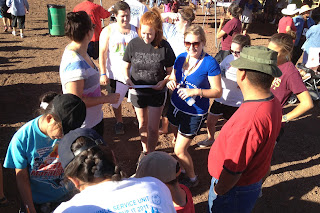

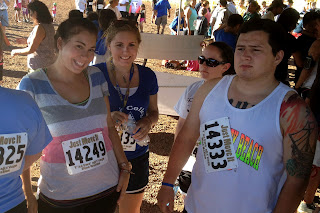


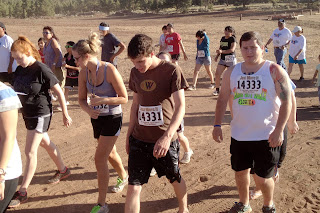


The WSU group walked from the dorms about a half mile to the event's starting place, then joined with hundreds of local people for a set of warm-up exercises and the 3.5 mile hike, followed by the half-mile walk back to the campus dorms.


In the evening, everyone was trying to unwind, pack up their clothes and journalism gear, and get ready to return home tomorrow (Thursday, June 21).
There were lots of hugs between the Winona State and Diné College students as they bid farewell. The students will see each other via Interactive Television next week when the class meets several times to view drafts.
In the fall, the students will get together again to celebrate and premiere their documentary films. Receptions will be held at both Winona State University and Diné College, dates to be announced soon.
Friends and loved ones of these students can be proud. It might be a stretch to say the groups operated in total harmony for the entire 2.5 weeks of field work. Even if there were disagreements or equipment malfunctions, the student journalists handled themselves professionally and found ways to be flexible and resourceful so they could complete their important work.
Before this journey started, the WSU students learned of the Navajo concept of Hozho: The Diné concept of balance and harmony. They were reminded to start each day fresh and new, in balance with nature, their classmates and themselves. They were asked to leave differences and difficulties behind them each night in their sleep, and begin each day as an opportunity to live, laugh, love and work in harmony with each other. The group has done remarkably well with this concept.
Another Diné concept learned was that of Nizhoni: Beauty. Everything and everyone is beautiful in their own way. It makes everyone's lives easier and happier if each person looks for the beauty in everything first. It's hard to maintain an ugly thought or a bad mood when you are specifically trying to find beauty in everything and everyone.
This may sound new-agey or preachy... In reality, these concepts are a part of life for most Diné people. One of the main goals of the Navajo Oral History project -- in addition to creating excellent documentaries -- is to gain insight and understanding of a unique culture. The Winona State students learned much from their Diné College partners. At the same time, the Diné students learned by being closely involved with the Winona State students.
On Thursday morning, the vans will be packed with people, luggage and journalism gear as the WSU group heads to the Albuquerque airport, where the students will catch their flights and make their way back home. They'll have the weekend to re-connect with family and friends before reconvening as a class again Monday morning.
To parents, relatives and friends of the students: THANK YOU for sharing these amazing student journalists with the program for the past several weeks. They've worked hard and had fun. Most importantly, they developed as human beings. Need evidence? Ask them what it means to be Navajo in the year 2012. Then just listen.
The day started with breakfast in the Diné College cafeteria.


The class met in the morning and each student journalism group showed samples of their interviews with Navajo elders recorded over the past 2.5 weeks. Class members offered constructive criticism and helpful suggestions.


Following class most of the journalism teams, made up of Winona State University and Diné College students, met and continued editing and polishing their documentary films on the lives of their elders.


In the early evening, the whole WSU group plus the Haskie family participated in a "Just Move It" event. The Navajo Nation's health promotion program sponsors these events each summer across the reservation. Local families come out and walk 3.5 miles and get a free t-shirt. The Navajo Oral History project group was lucky the Just Move It event tonight was scheduled at the Diné College-Tsaile Campus.


In the evening, everyone was trying to unwind, pack up their clothes and journalism gear, and get ready to return home tomorrow (Thursday, June 21).
There were lots of hugs between the Winona State and Diné College students as they bid farewell. The students will see each other via Interactive Television next week when the class meets several times to view drafts.
In the fall, the students will get together again to celebrate and premiere their documentary films. Receptions will be held at both Winona State University and Diné College, dates to be announced soon.
Friends and loved ones of these students can be proud. It might be a stretch to say the groups operated in total harmony for the entire 2.5 weeks of field work. Even if there were disagreements or equipment malfunctions, the student journalists handled themselves professionally and found ways to be flexible and resourceful so they could complete their important work.
Before this journey started, the WSU students learned of the Navajo concept of Hozho: The Diné concept of balance and harmony. They were reminded to start each day fresh and new, in balance with nature, their classmates and themselves. They were asked to leave differences and difficulties behind them each night in their sleep, and begin each day as an opportunity to live, laugh, love and work in harmony with each other. The group has done remarkably well with this concept.
Another Diné concept learned was that of Nizhoni: Beauty. Everything and everyone is beautiful in their own way. It makes everyone's lives easier and happier if each person looks for the beauty in everything first. It's hard to maintain an ugly thought or a bad mood when you are specifically trying to find beauty in everything and everyone.
This may sound new-agey or preachy... In reality, these concepts are a part of life for most Diné people. One of the main goals of the Navajo Oral History project -- in addition to creating excellent documentaries -- is to gain insight and understanding of a unique culture. The Winona State students learned much from their Diné College partners. At the same time, the Diné students learned by being closely involved with the Winona State students.
On Thursday morning, the vans will be packed with people, luggage and journalism gear as the WSU group heads to the Albuquerque airport, where the students will catch their flights and make their way back home. They'll have the weekend to re-connect with family and friends before reconvening as a class again Monday morning.
To parents, relatives and friends of the students: THANK YOU for sharing these amazing student journalists with the program for the past several weeks. They've worked hard and had fun. Most importantly, they developed as human beings. Need evidence? Ask them what it means to be Navajo in the year 2012. Then just listen.
Subscribe to:
Posts (Atom)